
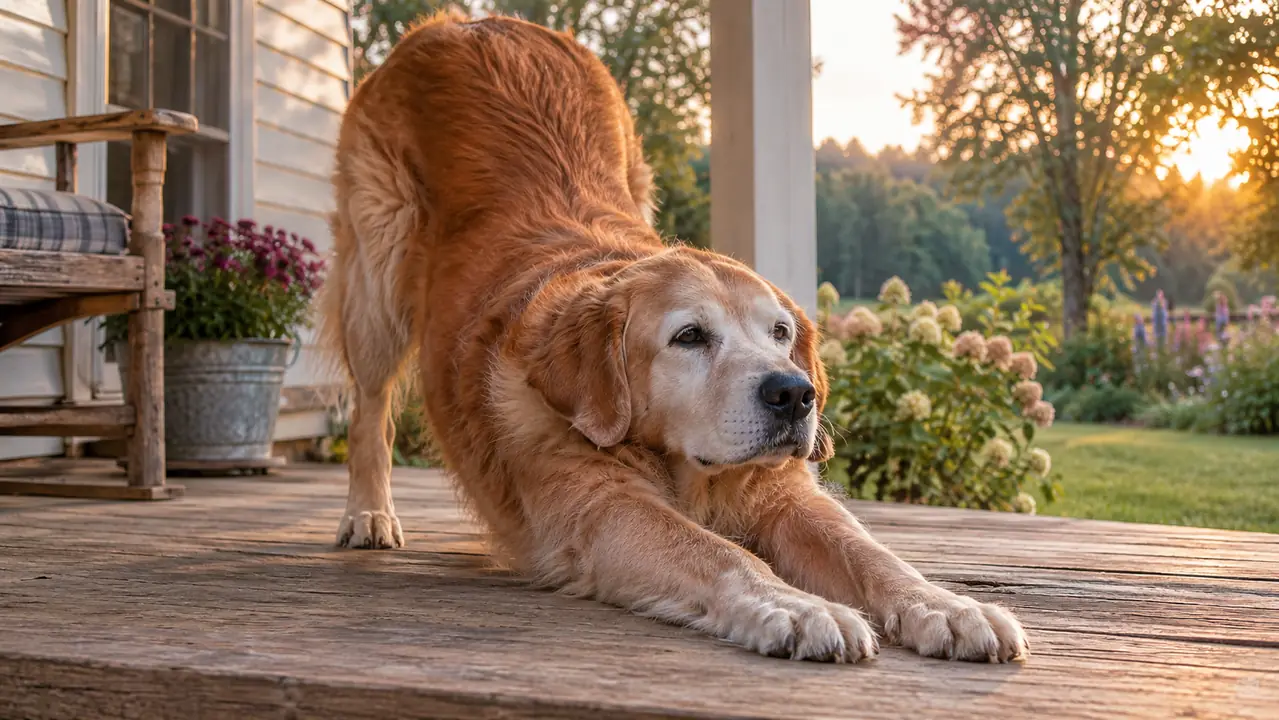
Juniper used to clear the tailgate of my Subaru Outback in one easy jump. These days she stands at the edge, looks at the ground, looks back at me, and takes a breath before she commits. That pause is how I first noticed the stiffness. She is an 11-year-old Australian Shepherd mix, about 48 pounds, and the vet says the arthritis is in her hips and her left elbow. I am 61, a semi-retired landscape designer who lives outside Sacramento, and I have watched this dog ride along on every camping trip and road trip for nine years. So I notice the small changes. The way she lingers over her first step in the morning. The way her left elbow seems to need a minute before it bends all the way. The way she used to hop into the car and now she climbs. The mornings are the hardest, and the first thing that helped was a joint supplement the vet suggested: Nutramax Laboratories Cosequin.
I am not a vet and I am not going to pretend to be one. What I am is a person who has spent the past year working out a morning routine with my regular vet, and the center of that routine is that supplement. This is how we do it, step by step, in case it helps you and your older dog get more good mornings. It is not complicated, and that is exactly why it works.
Start with the joint supplement vets recommend most
Nutramax Laboratories Cosequin is the #1 vet recommended retail joint health supplement brand, and it is the chewable tablet Juniper has taken every morning for the past year. Talk to your vet about whether it fits your dog's plan, then check today's price.
Amazon Check Today's Price on Amazon →Step 1: Talk to your vet before you change anything
The first step is not the supplement. The first step is a conversation with your vet. I took Juniper in when I first noticed the hesitation at the tailgate, and the vet diagnosed arthritis in her hips and a stiff left elbow. We talked about her weight, her activity level, and what the goals were. I want her to keep camping with me, keep taking road trips to collect stones for my garden and landscape work, and keep jumping into the back of the Outback. The vet helped me set realistic expectations for all of that. We did not talk about turning back the clock. We talked about keeping her comfortable and active for as long as we can.
Ask your vet about the right supplement and the right amount for your dog. I do not give dosing advice here because every dog is different. Juniper's dose comes from her vet, and we have adjusted it once over the past year as her needs changed. The vet also told me what to watch for: a dog that gets worse, stops eating, or seems painful needs a recheck, not a supplement adjustment.
This visit is also the time to rule out other causes of stiffness. An older dog can move slowly for several reasons, and the fix is different depending on the cause. The vet appointment is the cheapest part of the whole routine, and it makes everything else safer. Do not skip it.
Step 2: Give the chewable tablet with food, same time every morning
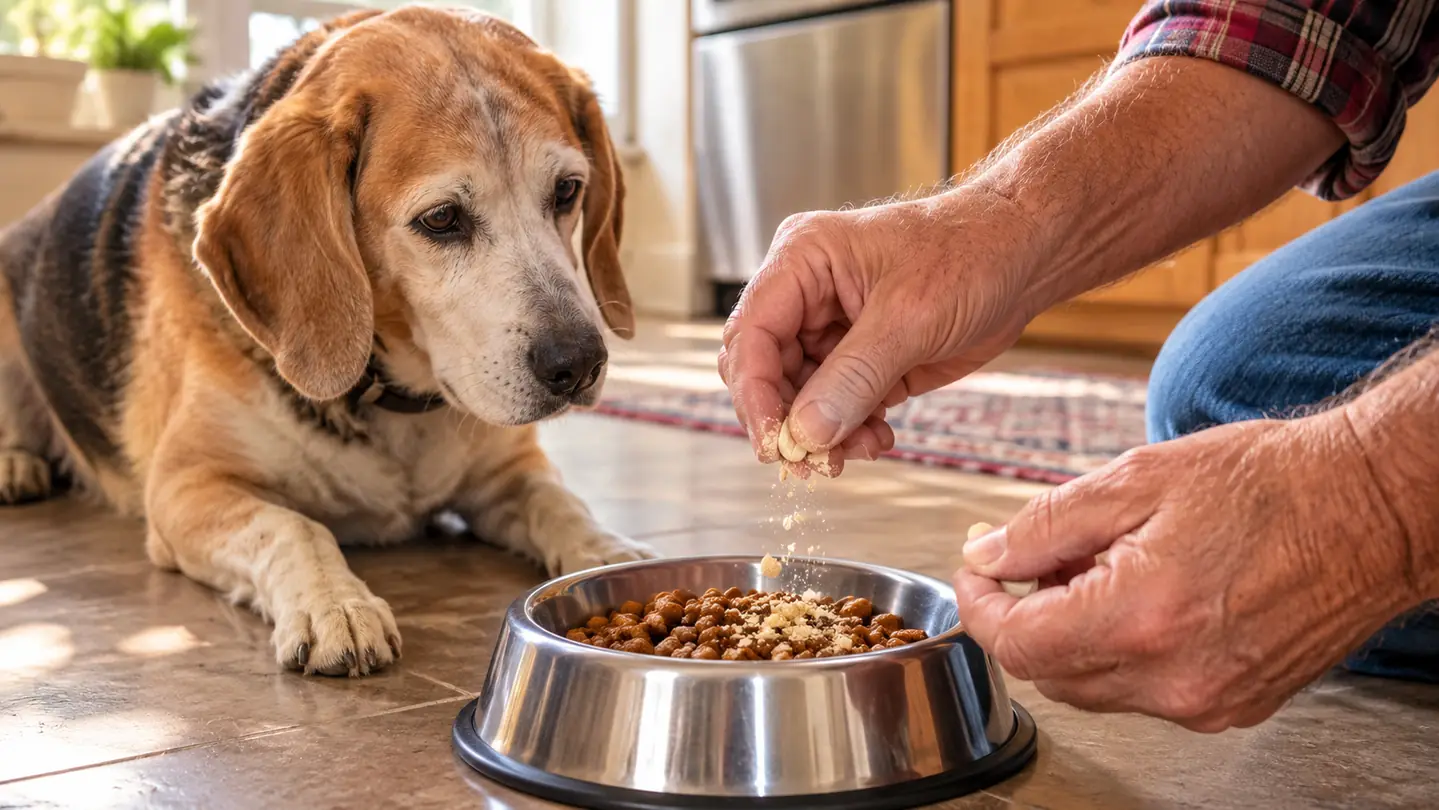
Once the vet gave us the go-ahead, the routine got simple. Juniper gets her Cosequin chewable tablet with breakfast, at the same time every morning. I crumble it over her food so she cannot pick it out and leave it. She is a medium dog, about 48 pounds, and the tablet is small enough that she eats it without a fight. The 132-count bottle lasts us a good while, and I order the next one before we run out.
The active ingredients are glucosamine hydrochloride, sodium chondroitin sulfate, and MSM. The glucosamine is in a form the company calls FCHG49 and the chondroitin is TRH122. I am not going to pretend I can say those from memory. What I know is that Cosequin is the #1 vet recommended retail joint health supplement brand, and that my vet was the one who suggested it. That recommendation mattered more to me than any label. Nutramax Laboratories has been a leader in pet health for over 25 years, which is a long time to stay in business doing right by dogs.
Consistency matters more than any single dose. A joint supplement is not a pain pill. It does not work in an afternoon. We have been at it for about a year, and the difference I see is in the pattern across weeks, not in one morning. So the tablet goes on the food every single day, including camping mornings, and the bottle rides in the same bag as the dog food.
Step 3: Warm her up before the tailgate test
The tailgate of the Outback is the daily test. A stiff dog should not go from a cold bed to a jump in one motion. On cold mornings I give Juniper a few minutes to move before she has to jump. I open the back, let her walk a slow loop around the driveway, and only then ask her to load up. That extra minute has saved us both a lot of frustration.
I also use a little massage on her hips and her left elbow while she eats breakfast. Nothing fancy. Just slow pressure along the muscles while she stands at her bowl. She leans into it, which is how I know it helps. The warmth of my hands, the slow start, the extra walking before the jump: all of it makes the jump easier. On the worst mornings, I put a hand under her hindquarters and lift, just a little, to take the edge off the landing. She does not love being helped, but she tolerates it, and that is good enough for me.
If your dog has trouble with the jump even after a warm-up, a ramp or a lift is the honest answer. I am not going to tell you that a supplement alone fixes a dog that cannot physically make the jump. We use a ramp on bad mornings, and Juniper uses it without argument. The goal is to keep her coming along, not to prove she can still jump.
Step 4: Make the camp and car setup work for an older dog
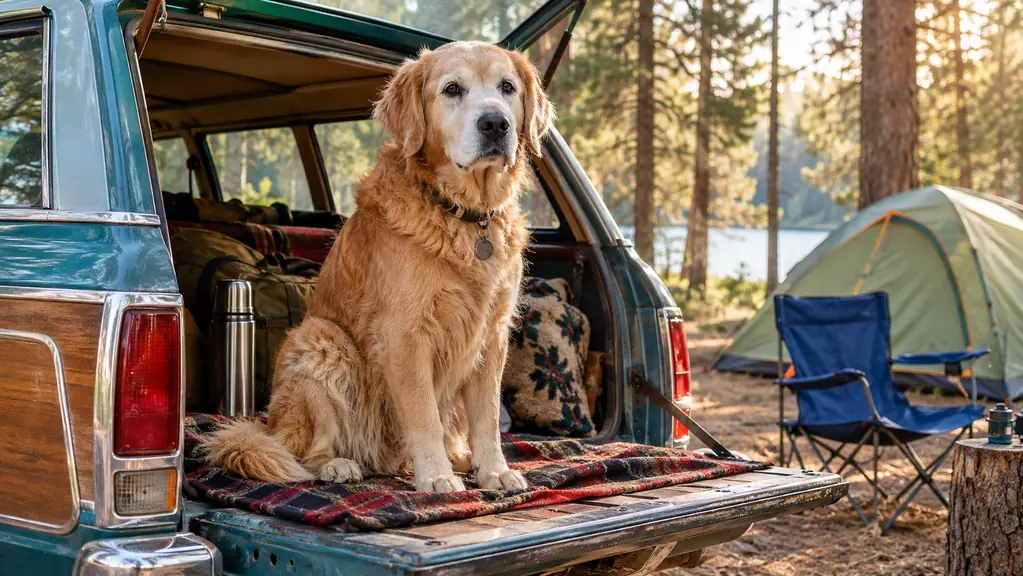
Camping with a senior dog means changing the setup, not giving up the trips. Juniper has ridden along for nine years, and I want those trips to keep happening. So I pack her a blanket for the back of the car, I pick campsites with flat ground and short walks, and I give her a warm place to sleep. Cold mornings are the hardest on her joints, so warmth is part of the routine, not an extra. I also think about the ground she walks on. Soft dirt beats gravel, and gravel beats pavement, and I route our walks accordingly.
The road trips for my garden stones are longer now. We stop more often, she walks a little at each stop, and I never let her sit stiff for hours and then ask for a big jump. The Cosequin tablet is part of the morning on the road just like it is at home. Same food, same tablet, same time. Routine is what holds on the road.
I also watch her on the gravel paths at campsites. She is steadier than she was a year ago, but she is still an 11-year-old dog with arthritis. I let her set the pace. If she wants the short loop instead of the long one, we take the short loop. The point of all of this is more good mornings together, not a mileage record.
Step 5: Keep a simple log and celebrate the small wins
I keep a small notebook for Juniper. I write the date, how she moved at breakfast, whether she hesitated at the tailgate, and how the walk went. It sounds like a lot, but it takes thirty seconds. The log is how I noticed that the hesitation got shorter over the first few months, and it is how I know when something is off. You cannot see a slow trend unless you write it down. A bad morning here and there is just a bad morning. A pattern of bad mornings is information, and the notebook is where that information lives.
The wins are small and I have learned to celebrate them. A morning where she jumps without the pause. A campsite walk where she takes the long loop. A road trip where she sleeps the whole way and wakes up ready to go. Those are the mornings I am working for. They did not all come at once. They came one at a time, over months, and the notebook caught every one.
None of this is a cure. The vet is clear about that, and so am I. Arthritis in an older dog is managed, not erased. But the routine, with the Nutramax Laboratories Cosequin at the center of it, has given us a year of good mornings and more trips than I expected. That is enough for me.
The hesitation at the tailgate got shorter over the first few months. That is the kind of proof I trust: a small change, repeated across weeks, caught in a notebook.
What I Wish I'd Known a Year Ago
I wish someone had told me that the supplement was only half of it. The other half is the way I move through the morning. When I stopped rushing Juniper out the door and gave her the extra minute to warm up, the mornings got easier for both of us. She is not the dog she was at two. Neither of us is. The routine is how we keep going anyway.
I also wish I had started the notebook sooner. The first few months are a blur, and I cannot tell you exactly when the tailgate pause started to shorten. If you are just starting this, write down today's morning. Then write down next week's. That comparison, more than anything I can say here, is what will keep you going.
One more thing: do not compare your dog to the dog next door, and do not compare her to the dog she was last year. Compare her to herself last month. That is the only comparison that matters, and it is the one the notebook makes easy.
What Else Helps
The supplement is one piece of the plan. What else helps: keeping her at a healthy weight, because every extra pound is load on the hips. Warm, soft places to sleep. Slow starts on cold mornings. Short, frequent walks instead of one long one. A ramp for the car on bad days. And regular vet checkups, because the plan needs to change as she changes.
Warmth is worth repeating. When the temperature drops, Juniper's stiffness goes up. I keep a fleece blanket in the back of the Outback at all times, and she sleeps on an old sleeping bag at the campsite. Small comforts, but they add up across a year.
I check in with the vet twice a year now, even when nothing seems wrong. Joint plans change. What worked at ten may not be enough at eleven, and the only way to know is to ask. The vet adjusts Juniper's plan when she needs it, and the supplement stays the constant.
Every dog is different, and your vet is the one who should guide you. But if you have an older dog who hesitates at the car, takes a few extra minutes to get going in the morning, and still wants to come along, this routine is a good place to start. It has been good for us. One tablet on the food, one slow warm-up, one honest look at how the morning went. That is the whole thing, and it is enough.
Give your dog the same morning routine our vet recommended
Nutramax Laboratories Cosequin is the #1 vet recommended retail joint health supplement brand, in a chewable tablet that goes straight on breakfast. Talk to your vet, then check today's price.
Amazon Check Today's Price on Amazon →