
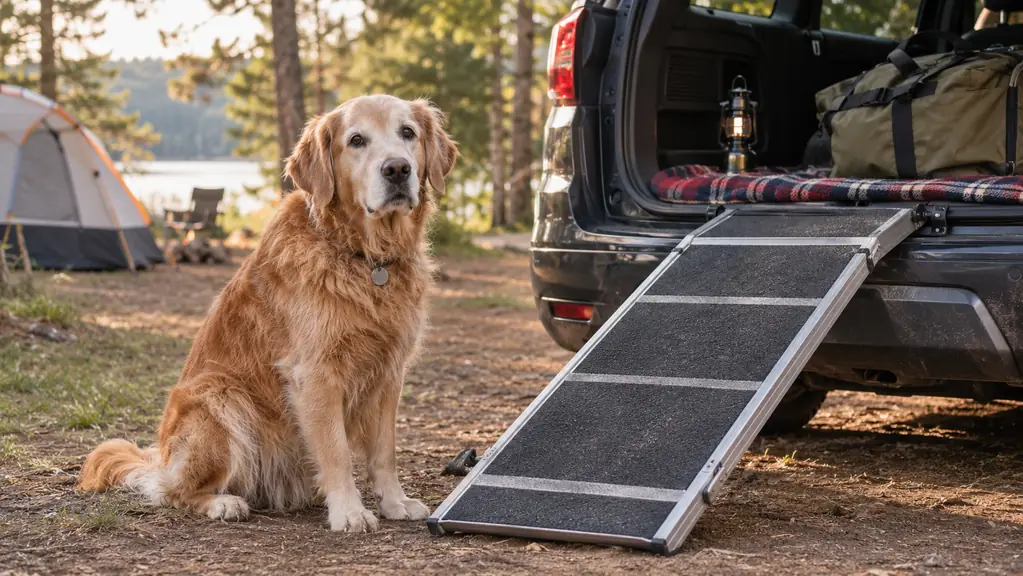
Juniper is an 11-year-old Australian Shepherd mix, about 48 pounds, with arthritis in her hips and a stiff left elbow. For nine years she jumped into the back of my Subaru Outback without a second thought. Last spring, she stood at the tailgate for a long moment, looked up at me, and then tried anyway. She made it, but she didn't jump. She climbed. That was the day I started shopping for a ramp, and the PetSafe Happy Ride Folding Dog Ramp is the one I've used almost every day since.
This is not a review written after one weekend of testing. This is what I've learned after months of daily tailgate trips, camping weekends, and a couple of long road trips across state lines to collect rocks for my garden work. I'll tell you what I love, what annoys me, and what I wish someone had told me before I bought it.
The Quick Verdict
A solid, lightweight ramp that solved our daily tailgate problem. The folding design is genuinely easy to live with, but you need to be honest about the setup routine and where you'll store it.
Amazon Check Today's Price →The ramp that ended our tailgate hesitation
If your dog has started to hesitate before jumping into the car, this is the ramp I'd start with. It folds flat, weighs 10 pounds, and handles dogs up to 150 pounds.
Amazon Check Today's Price on Amazon →How I've Used It
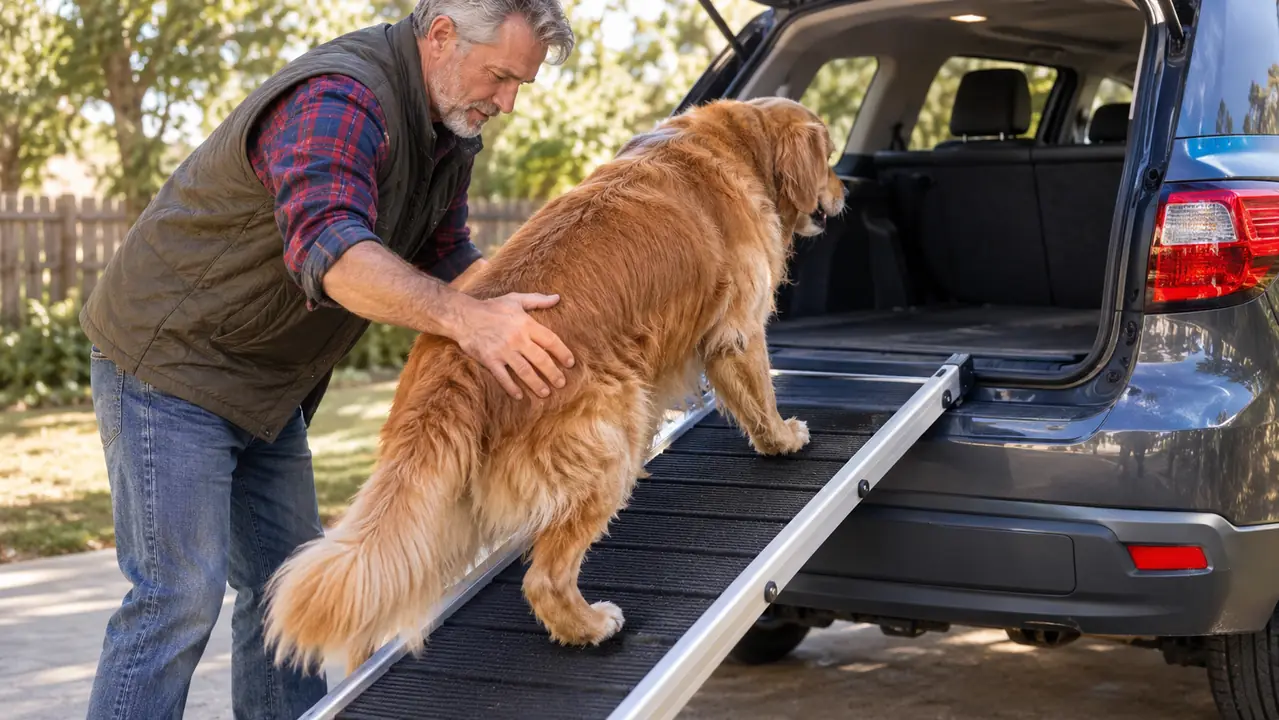
Our routine is simple. The ramp lives folded flat in the back of the Outback, and when we get to the car, I pull it out, unfold it, and set it on the tailgate. Juniper walks up, turns around, and settles in. On the way down, she walks down the same way. It took her about a week to trust it completely. Now she waits by the tailgate while I set it up. The first few days, I put the ramp on the ground and let her walk across it before I ever raised it to the bumper. That sounds like an extra step, but it is the step that made everything else work.
I've used it for daily errands, for a four-hour drive to the coast, and for a camping trip where the ground was uneven gravel. I've used it in rain, in cold morning air, and on a sloped driveway. The ramp is 62 inches long and 16 inches wide, and it weighs 10 pounds. The rubber feet on the bottom and the high-traction treads on the surface have kept it steady in every situation I've put it in. One morning at a campsite near the coast, the ground was wet and the tailgate sat on a slight slope. I set the ramp, tested it with my own foot, and Juniper walked up without a single slip.
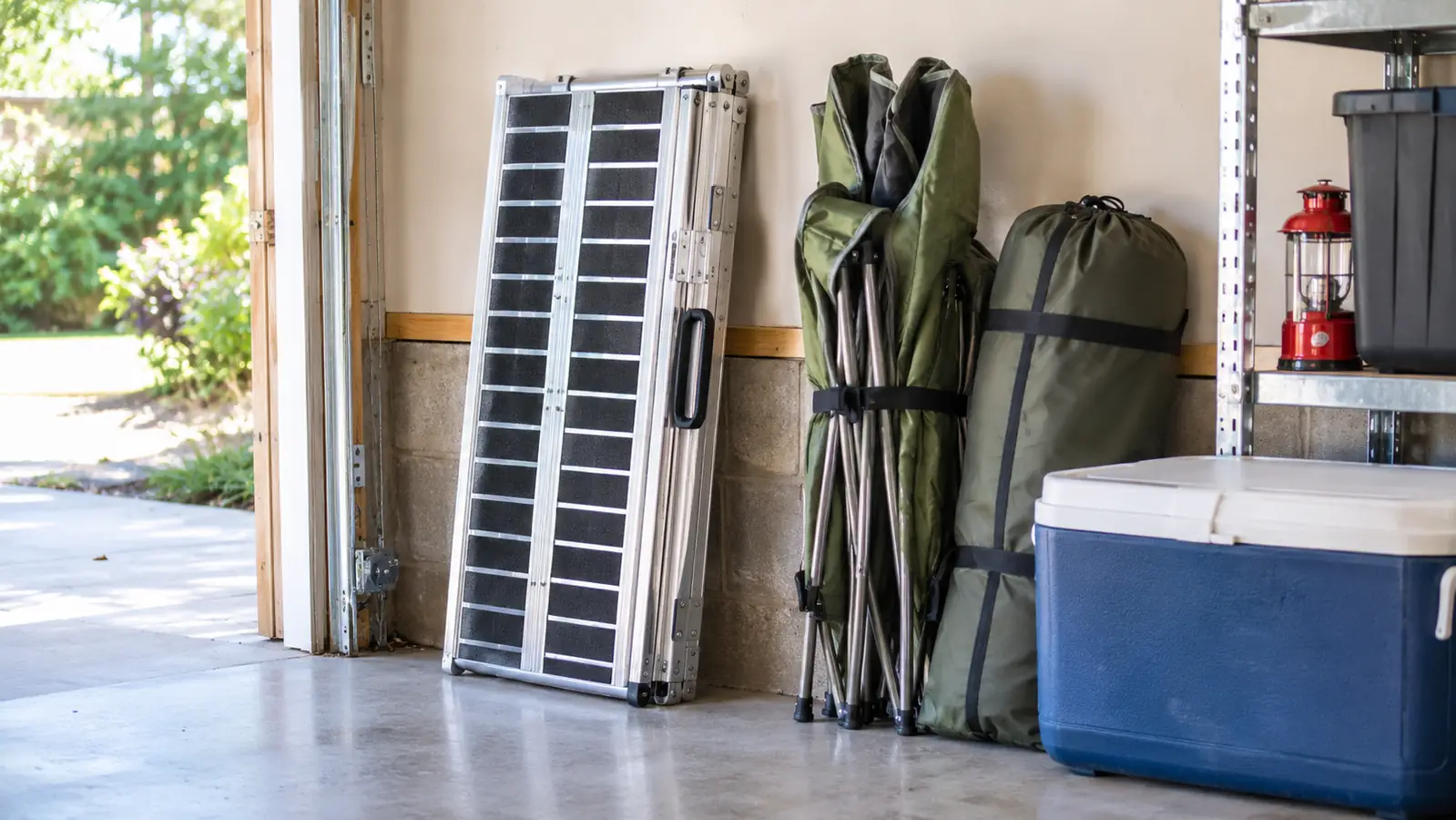
The safety release latch is a detail I didn't think I'd care about. It keeps the two halves locked together when the ramp is folded, which matters more than you'd think when you're carrying it through a campsite with a dog on a leash in the other hand. I also appreciate that the folded ramp measures 62 by 16 by 4 inches, so it slides between the cooler and the gear without taking over the whole cargo area.
Before I bought the ramp, I tried a low plastic step stool from the garage. It worked for about a week. Then Juniper knocked it sideways on the way down, and I caught her by the collar before she hit the driveway. That was the moment I stopped looking for a cheaper answer and ordered the PetSafe ramp. I mention this because the ramp is not the only option, but it is the one that stopped feeling like a workaround.
What Nobody Tells You Before You Buy
Here's the part that isn't in the listing. The ramp works beautifully, but it is not a magic solution. You still have to take it out, unfold it, position it, and put it away, every single time. That takes me about thirty seconds now. In the beginning it took closer to a minute, and on a cold morning with a dog waiting at the tailgate, a minute feels like an eternity. I tried leaving it set up on the tailgate for a whole weekend once, but it rained, and I spent the next morning drying it off. Now it comes inside with us.
The second thing nobody tells you is that your dog has to learn to use it. Juniper is a smart dog, but the first few times she looked at the ramp like I'd asked her to walk a plank. We practiced with treats, with me standing on the other side, and with the ramp at a lower angle on the ground before we ever tried it at the car. Give your dog time. The ramp is not the hard part; the change in routine is. I kept the first practice sessions to five minutes, and I always ended on a success, even if the success was just one paw on the ramp.
The third thing is storage. The ramp folds flat, which is great, but it is still 62 inches long. It fits in the back of the Outback without a problem, but if you drive a smaller car, you need to think about where it will live. It has spent time leaning against my garage wall, and it takes up less space than I expected, but it is not something you can stuff under a seat. Between trips, I keep it in the house now, leaning in a corner near the door, so it stays dry and ready.
The angle matters more than I expected. The ramp is 62 inches long, and if I set the bottom edge too close to the bumper, the slope gets steeper and Juniper hesitates at the top. I learned to give it a full arm's length of run-out on the ground. That extra foot of space is the difference between a confident walk and a pause. It took me a few tries to find that position, and now I do it without thinking.
The ramp is not the hard part. The change in routine is. Give your dog time to learn it.
The Details That Mattered Most
The 150-pound load capacity is more than enough for Juniper, who is 48 pounds. I like that the ramp is rated well above her weight, because it means the structure isn't working at its limit when she walks across it. The 62-inch length gives a gentler slope than a shorter ramp would, and that matters for a dog with hip arthritis. The 16-inch width gives her room to place her feet without feeling like she has to walk a tightrope.
The side rails are the feature I didn't know I needed. Juniper has never been a dog who spooks easily, but the rails give her a visual boundary that seems to make her feel more secure. She walks right up the middle, and I think the rails are a big part of why she stopped hesitating after that first week. The high-traction treads run the full length of the ramp, and they have held up well through rain, mud, and sandy campsites.
The rubber feet have held up well. I've used the ramp on gravel, on wet grass, on pavement, and on the uneven dirt of a campsite. It has never slipped out from under her. I check the feet before each trip, and after months of use they still look good. The ramp is made in the USA, and PetSafe backs it with a 1-year warranty. I registered mine the week I bought it, mostly so I would not forget, and the paperwork was straightforward.
The safety release latch has never come open on its own. I have carried the folded ramp through campgrounds, across gravel lots, and into a friend's garage, and the two halves stay locked together. That sounds like a small thing, but a ramp that flops open while you are carrying it is a ramp you stop carrying. This one has never done that to me.
Where It Shines
For us, the PetSafe Happy Ride ramp shines in the daily routine. The tailgate jump was the first thing Juniper started to struggle with, and removing that daily stress has made a visible difference in her willingness to get in the car. She used to hesitate at the tailgate. Now she walks up the ramp like it's always been there. On mornings when her left elbow is stiff, she still takes the ramp slowly, but she takes it. That is the whole point.
It also shines on trips. We camp a few times a year, and the ramp has come with us every time. It folds flat enough to sit under our camping gear, and it's light enough that I can carry it in one hand while holding Juniper's leash with the other. On a long road trip, it means she can get out at rest stops without me having to lift her, which protects both of us. Last fall we drove six hours to a canyon site, and she got in and out four times a day without any help from me.
The high-traction treads have been tested in rain and on wet grass, and I have never seen Juniper's feet slip. For a dog with a stiff left elbow, that stability is the whole point. She can take her time walking up, and the surface gives her footing she can trust. I have also used the ramp for the tailgate of a friend's truck, and the width and length worked there too.
Where It Falls Short
I want to be honest about the limitations, because nobody was honest with me. The ramp is not a set-and-forget solution. You will be the one who sets it up and takes it down, every time, forever. If you have back problems or trouble bending, this might not be the right tool for you. I do not have those problems, but I can feel the extra motion on a cold morning, and I have learned to set the ramp up before I load the car so I am not juggling bags and a ramp at the same time.
The plastic material is sturdy, but it is plastic. I treat it carefully, and I don't leave it out in the weather. It has held up fine so far, but I wouldn't call it indestructible. It's a piece of gear that needs to be stored properly, not thrown in the back of a truck and forgotten. The rubber feet are replaceable in spirit, but I have not needed to replace mine yet, and I check them before every long drive.
The learning curve was real. The first few times we practiced, Juniper was unsure, and I had to be patient. If your dog is anxious about new things, build in extra time for training before you need the ramp in a hurry. The ramp is not the problem. The unfamiliarity is. I would also warn you that the ramp needs a flat, stable surface to rest on. On deeply uneven ground, I have had to hunt for a better spot or place a flat stone under one of the feet.
Rain is the one thing that changes the routine. The treads still grip in wet weather, and the rubber feet hold on wet pavement, but I do not like putting the ramp away wet. I wipe it down with an old towel before it goes back into the car, and on a steady drizzle that adds another minute to every stop. It is not a dealbreaker. It is just part of the honest cost of using a ramp.
What I Liked
- Weighs only 10 pounds and folds flat for travel
- 150-pound capacity gives a wide safety margin for a 48-pound dog
- High-traction treads and side rails make the walk up feel secure
- Rubber feet hold steady on gravel, wet grass, and pavement
- Made in the USA with a 1-year warranty
Where It Falls Short
- Plastic shell needs careful storage and is not indestructible
- You set it up and take it down every single time
- Dogs need a real learning curve before they trust it
- 62-inch length can be awkward in a small car
Who This Is For
This ramp is for someone with a dog who still wants to go along, but who has started to hesitate at the car. It's for the owner who wants to protect a senior dog's joints before the jump becomes a real injury. It's for the person who camps and travels and wants their dog to come along without being lifted. If your dog is like Juniper, still eager at the door but slower at the tailgate, this ramp meets that exact moment.
It's also for someone who is willing to be part of the routine. The ramp only helps if you use it, and you will be the one carrying it, unfolding it, and putting it away. If that sounds like a fair trade for years more road trips with your dog, this is the ramp for you. I made that trade, and I would make it again.
This ramp is also for the owner who has watched their dog have a bad morning and then a good afternoon. Juniper's stiffness is not the same every day. Some mornings she walks up without a pause. Other mornings she stands at the bottom for ten seconds before she moves. The ramp gives her time to decide. It does not rush her, and it does not ask her to jump before she is ready.
Who Should Skip It
Skip this ramp if you're not willing to train your dog to use it. Some dogs take to a ramp immediately; others need days or weeks of practice. If you're looking for something your dog will use perfectly on day one, you might be disappointed. Juniper needed about a week of short practice sessions, and I know dogs who have needed longer.
Skip it if you have a very small car with no room for a 62-inch ramp. The folding design helps, but it doesn't make the ramp disappear. And skip it if you're hoping for a hands-free solution. This ramp makes the jump easier for your dog. It doesn't make the work disappear for you. It is a tool, not a replacement for your role in the routine.
And skip it if your dog is small enough that you can lift them comfortably and you have no plans to travel. A ramp is a piece of gear, and gear only earns its place if it gets used. For a 20-pound dog who is happy to be carried, a 62-inch ramp is a lot of storage for very little payoff. For a 48-pound dog who still wants to ride along, it earns its place every single day.
Give your dog years more tailgate trips
The PetSafe Happy Ride ramp is the piece of gear that kept Juniper coming along on every trip. If your dog has started to hesitate, this is the ramp I'd try first.
Amazon Check Today's Price on Amazon →