
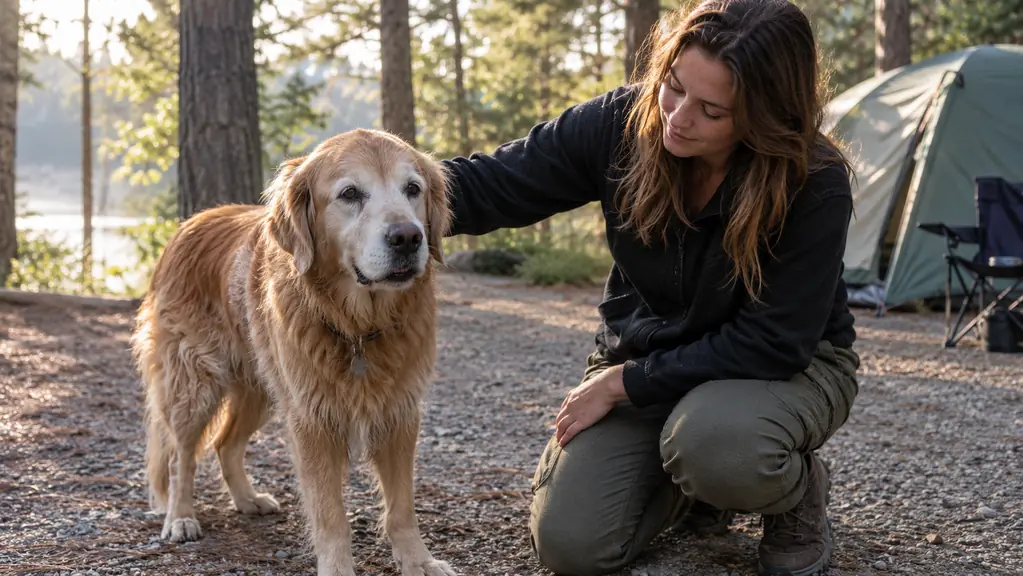
Juniper turned 11 last spring, and the first thing age took was the jump into the back of the Subaru. For nine years she had sailed in without a second thought. Then one cold morning she stood at the tailgate with her front paws up, her rear end trembling, and looked back at me with a face that said she wanted to come along but was not sure she could. Her hips are stiff and her left elbow is worse. Our vet has us on a joint plan built around daily movement, not less of it, so the question became how to keep her coming along without asking her to hurt herself. That is how I ended up with two kinds of rear support in the house at the same time.
I bought two kinds of rear support to try side by side: the PICK FOR LIFE lift harness and a classic hind leg sling. The short answer is that I keep the PICK FOR LIFE harness in the car and reach for it on walks, stairs, and the tailgate, while the sling lives by the back door for quick two-step help. One steadies a dog over distance. The other lends a hand for a few feet. Here is how they compare, and who should buy which.
| PICK FOR LIFE Lift Harness | Classic Hind Leg Sling | |
|---|---|---|
| Rear support | Two padded handles spread the lift across the rear end | One narrow strap concentrates support in a single spot |
| Hands needed | Two hands, one on each padded handle | One hand, leaving the other free for doors and leashes |
| Fit range | Adjustable strap, 52 to 76 inches, sized for large and extra large dogs | Fixed length, little room to adjust |
| Comfort over distance | Broad nylon support with padded handles | Thin webbing can dig in on longer walks |
| Cost | More features, more money | Usually the budget option |
| Cleaning | Machine washable nylon | Machine washable webbing |
| Stairs and curbs | Two handles give leverage to lift the rear up a step | One strap can swing the dog sideways |
| Best for | Daily walks, stairs, tailgate, rehab after surgery | A quick hand under the rear for a few steps |
Where the Lift Harness Wins
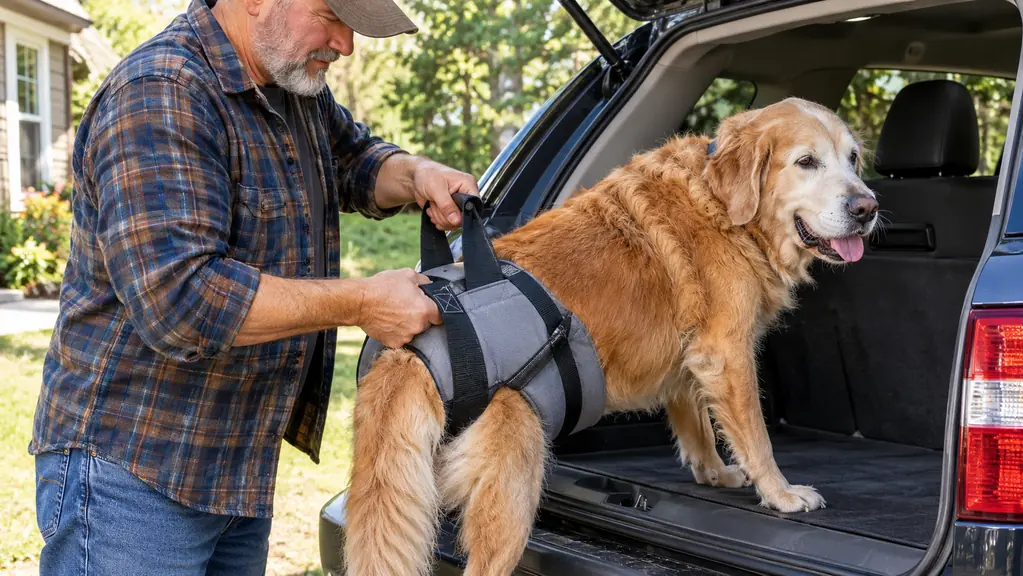
The lift harness wins the moments that matter most for us: the tailgate, the porch steps, the gravel path down to the campsite. The two padded handles are the whole point. One hand on each handle and I can take real weight off her rear without pulling her off balance. The broad nylon support sits under her belly and rear, so the lift spreads out instead of pressing into one line. The first time I used it, Juniper stopped mid-step, looked back at me, and kept walking. On a cold morning when her hips are at their stiffest, that is the difference between a real walk and a hobble out to the grass and back.
The PICK FOR LIFE harness is also the easier of the two to fit. The strap adjusts from 52 to 76 inches, so it cinches down for a 48 pound dog like Juniper and still has room for a much larger one. The drawstring closure means I can snug it without fighting buckles while she stands there waiting. The padded handles are long enough that I can walk upright instead of bent over, which matters on a half-mile path. And when she rolls in something at the campsite, the whole thing goes in the washing machine. I have washed it more times than I can count and the nylon still looks new.
Where the Hind Leg Sling Wins
The classic hind leg sling wins on simplicity, and I do not want to pretend otherwise. It is one strap with a handle, so it takes one hand and leaves the other free for the leash, the car door, or the water bowl. It is also faster to put on, which matters when Juniper is already standing at the door and I am holding my keys. For the quick kind of help, the moment when she just needs a small lift to get from the couch to her feet, the sling beats the harness. I keep one by the back door for exactly that.
It is also the budget option, which matters when you are not sure how much help your dog will need, and it packs down small enough to live in a daypack. Where it falls short is distance and steadiness. The narrow strap concentrates the support in one spot, and on a longer walk it can dig in or slide sideways. On stairs, a one-hand grip can let the dog swing. For a few feet it is plenty. For a mile it is not. For a small dog that only needs a little help, the sling may be all you ever need.
For daily walks and the tailgate, the lift harness is the one I reach for
If your older dog still wants to come along, the PICK FOR LIFE lift harness gives you two hands of steady support on the stairs, the trail, and the car. It adjusts to fit, it washes clean, and it has lived in our Subaru since the first week. Check today's price on Amazon and see if the size matches your dog.
Amazon Check Today's Price on Amazon →Who Should Buy Which
Buy the lift harness if your dog needs help more than a few times a day. That means daily walks, stairs, the car, and any distance longer than the yard. It is also the better choice after surgery, when your dog needs steady, even support and you want to avoid twisting. Run it past your vet first, especially after an ACL repair. Our vet was glad we had it, because it lets Juniper keep moving without me wrenching her sideways.
Buy the sling if your dog only needs a hand for a few steps, or if you mostly need one hand free. It is also the sensible first purchase when you are not sure how much support you will need, because it costs less and takes up almost no space. And buy one as a backup even if you go with the harness. I keep both. The harness does the heavy work and the sling rides in the daypack for the short stuff.
If your dog is a large breed, I would go straight to the harness. The sling works for a quick boost, but a heavy dog needs the even, two-sided support of padded handles, and your back will thank you. Juniper is 48 pounds and I notice the difference between the two tools on every single walk. A bigger dog would make that difference even harder to ignore.
How I Tested Both With Juniper
I tested both over about six weeks, through the things we actually do. The daily test is the tailgate of our older Subaru Outback. Juniper has ridden along on every camping trip and road trip for nine years, and the stiffness first showed up as hesitation at that jump. With the harness, I stand behind her, one handle in each hand, and lift her rear just enough to take the edge off. She hops, I lift, and she is in. The same move works on the porch steps and the step up into the campsite trailer. The first week felt awkward for both of us. By the second week, she started waiting for the harness at the tailgate.
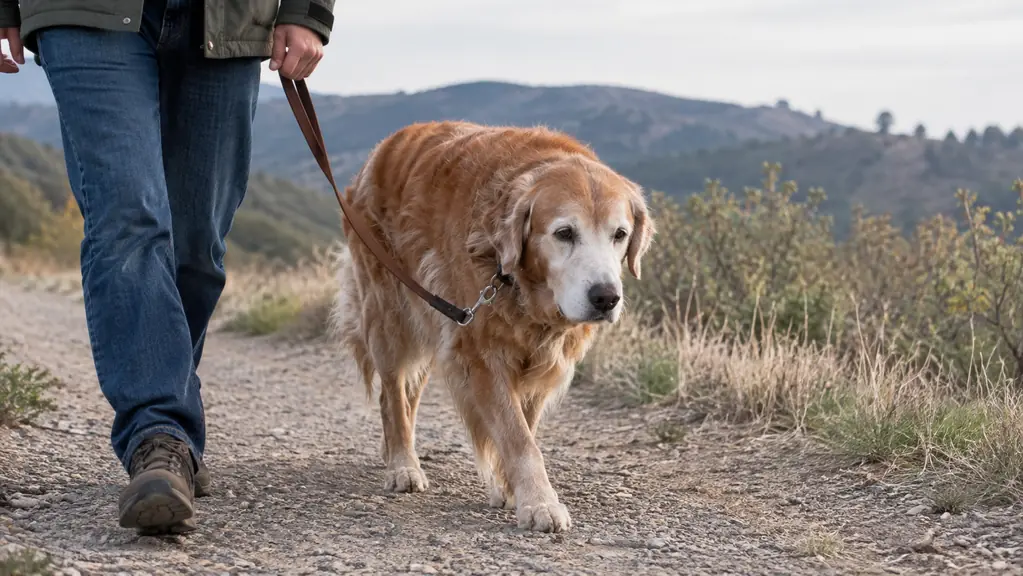
We also took both on a road trip to collect stones for my garden work, with cold mornings and gravel paths. The harness was the one that held up over distance. On a half-mile walk on gravel, the sling started to ride up and I had to stop and adjust it twice. The harness stayed put the whole way. The sling did shine at rest stops, where Juniper only needed a boost down from the back seat and I had the leash in one hand and a water bowl in the other. That is the honest split between them.
What to Look For in Either One
Whatever you choose, look for the same things I looked for. Padded handles matter more than you think, because your hands are doing the lifting and a thin strap will be cutting into your palms by the end of a walk. An adjustable strap matters if your dog is between sizes, and it matters even more if your dog is still losing or gaining weight. Machine-washable material is not a luxury. Older dogs have accidents, and camp dogs find mud.
For a lift harness, check that the support sits under the rear and belly without pressing on the joints, and that the handles are long enough for you to stand upright while you walk. For a sling, look for a wider strap so it does not dig in, and a handle that does not slip in your hand. Neither one should ever be the only thing holding your dog up on stairs. You are the other half of the lift, and your back matters too.
How to Use a Lift Harness Safely
The technique matters as much as the gear. Stand close behind your dog, bend at the knees, and lift with your legs, not your back. Keep the lift even, one handle in each hand, and let the dog do as much of the work as she can. The harness is there to take the edge off, not to carry her full weight. On stairs, go one step at a time and let her set the pace. If she stops, you stop.
Watch for signs that you are asking too much. If Juniper's rear end starts to sink or her breathing gets heavy, we turn around and head back. The harness makes the walk possible, but it does not make a tired dog less tired. Our vet reminds us that rest is part of the joint plan, and a short good walk beats a long one that leaves her sore the next day. I would rather carry the harness and not need it than need it and not have it.
The Honest Tradeoffs
Nobody tells you that a two-hand harness means you are not holding a leash in the same hand. I clip Juniper's leash to her collar and keep it loose while I hold both handles, and it works, but it took practice. You also bend a little more with the harness, because the handles sit lower than a sling handle. My back noticed on long walks, so I stand tall and let the harness take the weight instead of hunching over her.
And neither tool is a fix. Juniper's hips are still stiff on cold mornings, and the harness does not change that. It changes whether she can still come along. The joint plan, the daily movement, and the right amount of rest do the real work, and the harness keeps her safe while she does it. If your dog is newly struggling, start with the vet, not with the gear. That was the first step for us, and it is the right one.
In the end, the right answer for us was both, with clear jobs for each. The PICK FOR LIFE harness handles the real work of keeping Juniper steady on the walks, stairs, and tailgate jumps that make up her days. The sling handles the quick moments. If you can only buy one, buy the harness. If you are still figuring out how much help your dog needs, start with the sling and add the harness when you know. Either way, the goal is the same: one more camping trip, one more gravel path, one more year of coming along.
The harness that keeps her coming along
Six weeks in, the PICK FOR LIFE lift harness is the tool I reach for every single day, and the sling is the backup. If your dog still wants to ride along, camp, and walk slow gravel paths with you, this is the support that makes it possible. Check today's price on Amazon and see if it is the right fit for your dog.
Amazon Check Today's Price on Amazon →