
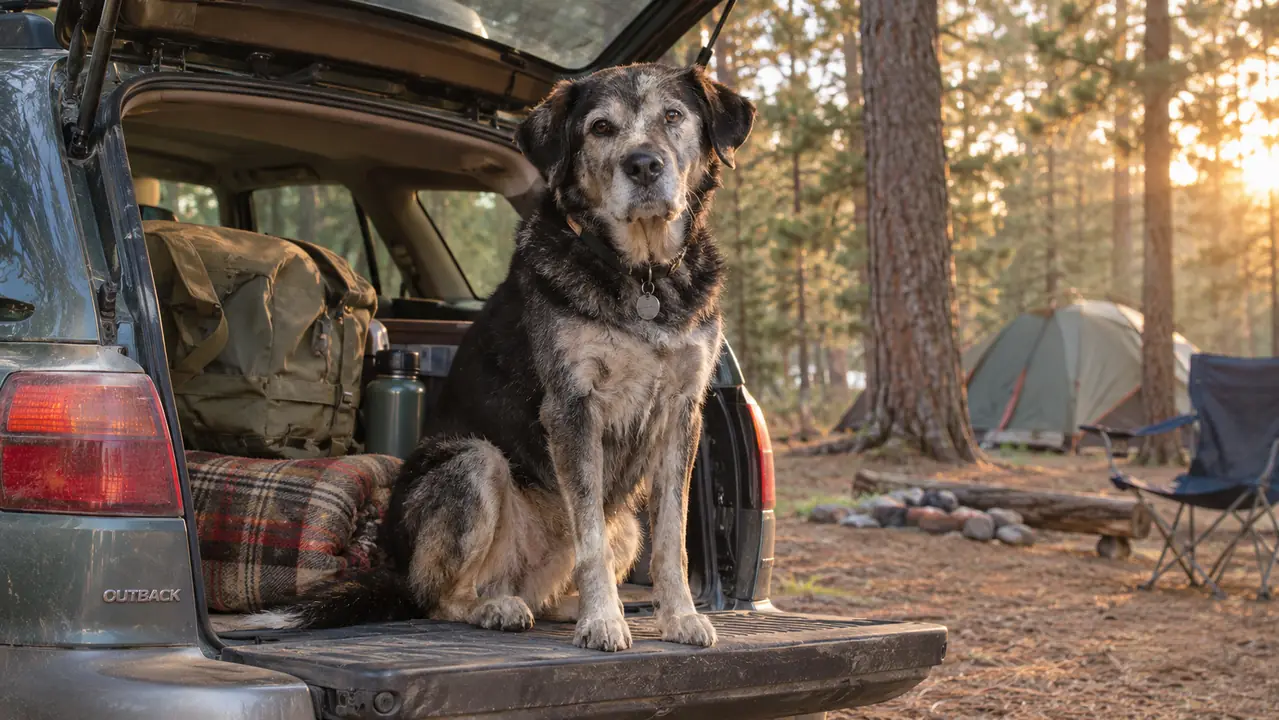
The first time I watched Juniper hesitate at the tailgate, I told myself she was just tired. She is an 11-year-old Australian Shepherd mix, about 48 pounds, and she has jumped into the back of my Subaru Outback on every camping trip for nine years. Then one cold morning she stood at the bumper, looked up at me, and waited. That wait is how I learned that senior dogs do not announce their stiff joints. They just stop jumping.
Our vet walked me through the options, and omega-3 came up early. Not as a cure, she said, but as one piece of a joint plan that also includes her weight, her activity level, and a little patience on cold mornings. I started adding Zesty Paws Salmon Oil to Juniper's breakfast that week. The bottle is an 8.5-ounce liquid oil with omega-3 fatty acids, EPA and DHA, from wild-caught Alaskan Pollock and salmon. It was the simplest option our vet was comfortable with. Before the oil, I tried a powder that clumped in her bowl and a chew she would not touch. The oil was the first thing she actually ate happily. A year later, she still hesitates sometimes, but she jumps in on her own more days than not. Here is exactly how I add it to her food, what I learned along the way, and where I would tell you to be careful.
The salmon oil I pour on Juniper's breakfast every morning
Zesty Paws Salmon Oil is the bottle that has sat on our kitchen counter for a year. It is a simple liquid oil with omega-3 fatty acids from wild-caught Alaskan Pollock and salmon, made for dogs and cats, and it is the easiest supplement I have ever added to a dog's routine.
Amazon Check Today's Price on Amazon →Step 1: Ask your vet before you add anything
I know this sounds like the boring part, but it is the part I would not skip. Juniper has arthritis in her hips and a stiff left elbow, and she takes other things for that. Our vet needed to know about the salmon oil so she could check it against Juniper's meds and confirm the right amount. She also reminded me that omega-3 is not a painkiller. It is a fatty acid that supports joint health, skin, coat, immune function, and more, but it is not going to erase arthritis. We had that conversation last October, at Juniper's yearly checkup, and I brought the bottle with me. The vet read the label out loud, checked the active ingredients, and nodded. That is the level of checking I mean.
Ask your vet about your dog's specific needs, especially if your dog is on medication, has a health condition, or is pregnant. The vet can also help you figure out how much to give. The bottle gives general guidance by weight, but your dog's situation might change that. When in doubt, start with the lower end and watch how your dog responds. At that October visit, Juniper weighed 48 pounds on the clinic scale, which is exactly where she should be. The vet said that keeping her weight steady was as important as any supplement, because extra pounds are extra load on stiff hips.
One more thing I wish someone had told me: omega-3 builds up in the body over weeks, not overnight. The vet said to give it a good month before judging whether it helps. I did not see a dramatic change on day three. I saw a slow, quiet difference by week six, and that is the honest timeline. I almost quit in week two because nothing seemed to be happening. I am glad I did not, but I would have been less twitchy if someone had set the expectation up front.
Step 2: Pick a salmon oil made for dogs
You can buy salmon oil for people, but I would not use it. Dog supplements are formulated for a dog's size and digestive system, and the dosing is much easier. Zesty Paws Salmon Oil comes in an 8.5-ounce bottle, which is 8.5 fluid ounces of oil, and the active ingredients are omega-3 fatty acids, EPA and DHA, from wild-caught Alaskan Pollock and salmon, with tocopherols as a preservative.
The Zesty Paws bottle lists benefits like coat care, skin care, shedding support, heart health, immune support, and joint health. That is a long list, and I do not think the oil is magic. I think of it as a small, steady contribution to a lot of systems at once. For an older dog who still wants to camp and hike and ride along, that kind of broad support is exactly what I want. I chose the oil over capsules for a simple reason: I did not want to fight Juniper every morning. Pilling a dog who has opinions is a two-person job in our house. The oil just goes into the bowl.
Check the label for the source. This one says wild-caught Alaskan Pollock and salmon, and it includes tocopherols, which are a form of vitamin E that helps keep the oil fresh. A good salmon oil should smell like fish but not rancid. If it smells off, send it back. That is what the 100% customer satisfaction guarantee is for. In the summer I keep the bottle in the fridge door. Cold oil pours a little slower, but it keeps fresh longer.
Step 3: Start with a small amount
When Juniper first tried salmon oil, I did not pour a full dose on her food. I started with about a quarter of the recommended amount for her weight, mixed it into her breakfast, and watched. That first morning was a Tuesday. She ate the whole bowl in under a minute and then looked at me for more. I was relieved, but I still kept the amount small for the rest of the week. Dogs can have sensitive stomachs, and a sudden spoonful of oil is a lot for an older digestive system. Starting small gives the dog time to adjust.
I also learned to introduce it slowly for a different reason: taste. Juniper loves fish, so she lapped it up. But some dogs are pickier. If your dog turns up their nose, try mixing the oil thoroughly into wet food, or drizzle it over kibble and let it soak in for a minute before serving. The oil softens the kibble slightly and the smell can make the food more appealing. I learned that trick from a friend whose terrier refused the first three bowls. She let the oil sit on the kibble for five minutes, and the terrier cleaned the bowl.
Watch your dog's digestion during the first week. Loose stool is the most common sign that you are going too fast or giving too much. It happened to us once, on day five, when I got impatient and gave Juniper a full dose. That evening told me everything I needed to know about patience. I cut back to half the amount, gave it a few days, and worked up slowly. If loose stool does not settle, check with your vet. Every dog is different, and the right dose for Juniper might not be the right dose for yours.
Step 4: Measure the right dose by weight
The Zesty Paws bottle includes dosing guidance by weight, and that is the number to follow, not a guess. Juniper is 48 pounds, so she gets the amount recommended for her weight range. I measure her dose carefully, over the bowl, because a slick of fish oil on tile is a hazard for an old dog and for me. A supplement only works if you give the right amount consistently.
Consistency matters more than perfection. I pour Juniper's oil over her breakfast every single morning, and I have missed maybe three days in a year. The days I missed were travel days when I forgot to pack it, and honestly, she was fine. But the steady daily habit is what gives the omega-3 time to build up in her system. The bottle lives on the kitchen counter next to her bowl, so the routine is right there in front of me.
If you travel as much as we do, pack the bottle in a zippered bag. Oil can leak under pressure changes in the car, and fish oil in a duffel is a mistake you only make once. I learned that on a trip to the coast last spring. The cap worked its way loose, and a sweatshirt came home smelling like a cannery. Now Juniper's bottle lives in a small toiletry bag with her other supplies, and it rides in the door pocket of the Outback where it stays upright.
Step 5: Make it part of the routine, then watch and adjust
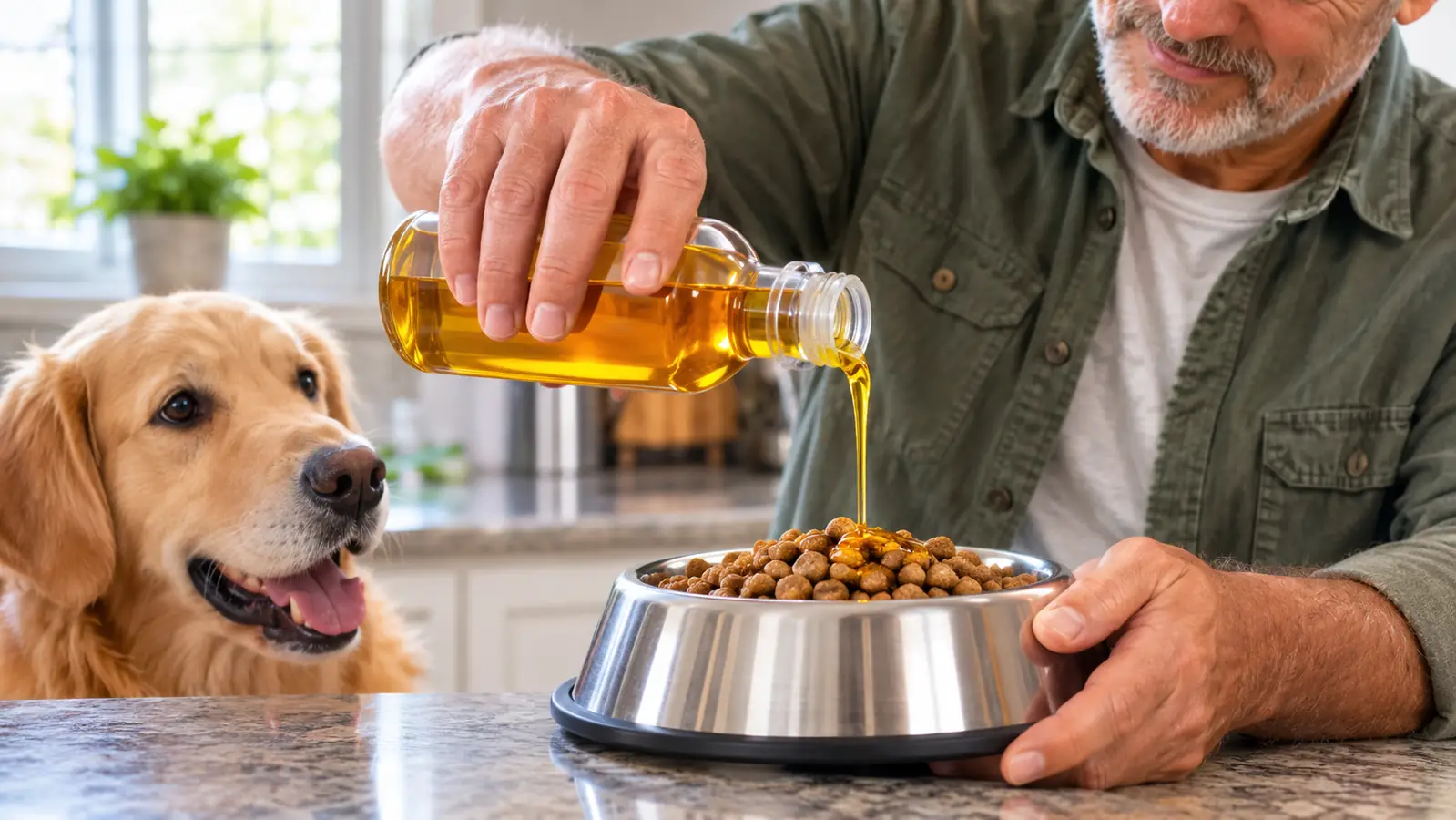
The morning routine is simple. Juniper's breakfast goes in her stainless bowl, I add her measured dose of Zesty Paws Salmon Oil, I give it a quick stir, and she cleans the bowl. The whole thing takes thirty seconds. That is all there is to it, honestly: it has to be easy enough to do every day, or you will not do it every day. The bottle sits on the counter next to her bowl, so I do not even have to think about it. I just do it.
After the first month, I started paying attention to the small things. Her coat looked a little glossier, and she seemed to shed less. She still had stiff mornings, but she got up and moved more easily after a slow start. The hesitation at the tailgate did not disappear. It just became less frequent. That is the honest result, and it is worth the thirty seconds a day. One morning in late September, at a campground in the Sierras, she jumped into the back of the Outback on the first try. No pause, no look back at me. She just gathered herself and went. I stood there with the tailgate open and watched her do it, and I thought about all those small mornings adding up.
Keep checking in with your vet. If your dog's needs change, the dose might change, or the supplement might not be right anymore. The goal is not to add a supplement forever. The goal is to keep your senior dog comfortable and moving, and that means staying flexible and honest about what is working. For us, right now, this is working. That is enough.
What Else Helps
Salmon oil is one small piece of a bigger picture for an older dog. Juniper's plan also includes keeping her at a healthy weight, shorter but more frequent walks, a ramp for the tailgate on bad days, and a warm bed in the car. The ramp folds up and lives behind the back seat of the Outback, and on cold mornings I put it down without being asked. The warm bed is an old sleeping bag folded into the cargo area. We walk twice a day, about twenty minutes each, at her pace. Cold mornings are harder for her, so I let the Outback warm up before we head out. On the days we go out to look for stones for my garden work, I bring a folding stool so she can rest in the shade while I poke around. She supervises. That is her job now. The vet handles the medical side. I handle the daily stuff: the food, the water, the slow pace, and the extra patience. If you are wondering whether omega-3 could help your senior dog, ask your vet first, then give it a fair month. That is the honest way to find out.
The hesitation at the tailgate did not disappear. It just became less frequent. That is the honest result, and it is worth the thirty seconds a day.
Give it a fair month, the way we did
Zesty Paws Salmon Oil is the bottle on our counter, and it is the one I would buy again tomorrow. It is easy to measure, easy to mix into breakfast, and backed by a 100% customer satisfaction guarantee. If your vet gives you the green light, this is a simple place to start.
Amazon Check Today's Price on Amazon →